
Pranayama
Breath acts as a seed that creates new rhythms or patterns of being.
Small changes in this seed energy can transform one’s entire mental and physical being.
In Indian spiritual tradition, there are two main themes: Prana and Consciousness. Prana is the subtle life energy that infuses and sustains all life forms. Consciousness is the higher order of reality. According to this vast and ancient tradition, first comes prana, then comes your body.
Pranayama practices involve conscious control of the breath on both the inhalation and exhalation, sometimes marked by intervals of breath retention. The practices optimize the natural expansion and contract of the lungs, mobilizing the heart and increasing oxygen and blood flood throughout the body. They naturally enhance the physical, mental, emotional and spiritual well-being of the practitioner. Traditionally, they are part of a larger yogic tradition, designed to help us to see beyond the suffering caused by egoic attachments in the physical realm, revealing our true and essential nature as an extension of pure awareness.
Through stilling the thought patterns of the mind, we create a living possibility to experience the interconnectedness of all things. There is a saying from a song that goes, “If you don’t see God in all, you won’t see God at all.” Such an understanding and experience of the Oneness of all things has the potential to reorient our values, choices and actions towards the essential qualities of compassion, joy, peace, kindness and service, for the betterment of all.
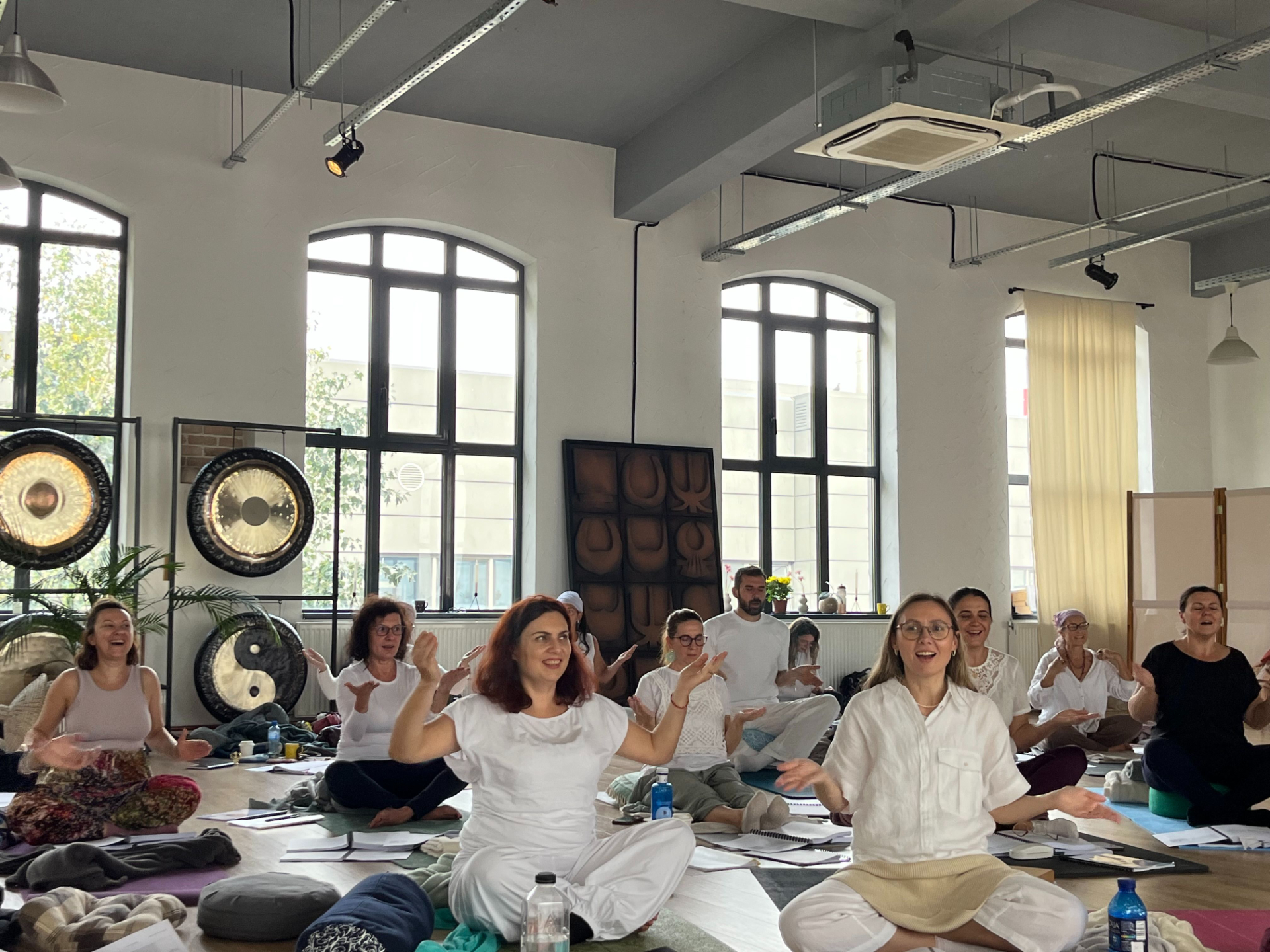
Pranayama or breathing practices are a powerful tool to transform the mind and body. Pran means first unit. Ayama means expansion. Together, Pranayama means expansion of our life force. The flow of prana plays a crucial role in maintaining and revitalizing our cells, nervous system, energy and overall health.
By refining the breath through techniques like long deep breathing, reduced breath frequency and breath suspension, it is possible to gain mastery over the energy, well-being, and emotional resilience of your body and life force. By slowing down and extending the breath, being opposite to a rushed, shallow and quick sympathetic nervous system response to living, we learn to be attentive. To focus and be still.
Motion is inevitable. Stillness is intentional.
When we focus on the wholesome effects of a conscious exhalation, the heart rate slows and we begin to drop into the present moment, in our body-self, triggering the parasympathetic nervous system. This ‘slowing’ of the heart rate and activation of the parasympathetic nervous system shifts attention inward to being aware, to being embodied. Void of comment, preference, reference, judgement, self-protection or fear. You get to hang out with things as they are, rather than thinking they ought to be different. Being with what is, moment-to-moment, shifts attention and awareness to a simpler, calmer, more peaceful, and grounded state of presence.
As we settle in, we let go of reaching out, and begin to drop in, co-regulating with ourselves. Then, as we come into more stillness, we begin to self-regulate with presence. Our nervous system shifts, our attention deepens. We connect with a deep, familiar knowing. A coming home to our self.
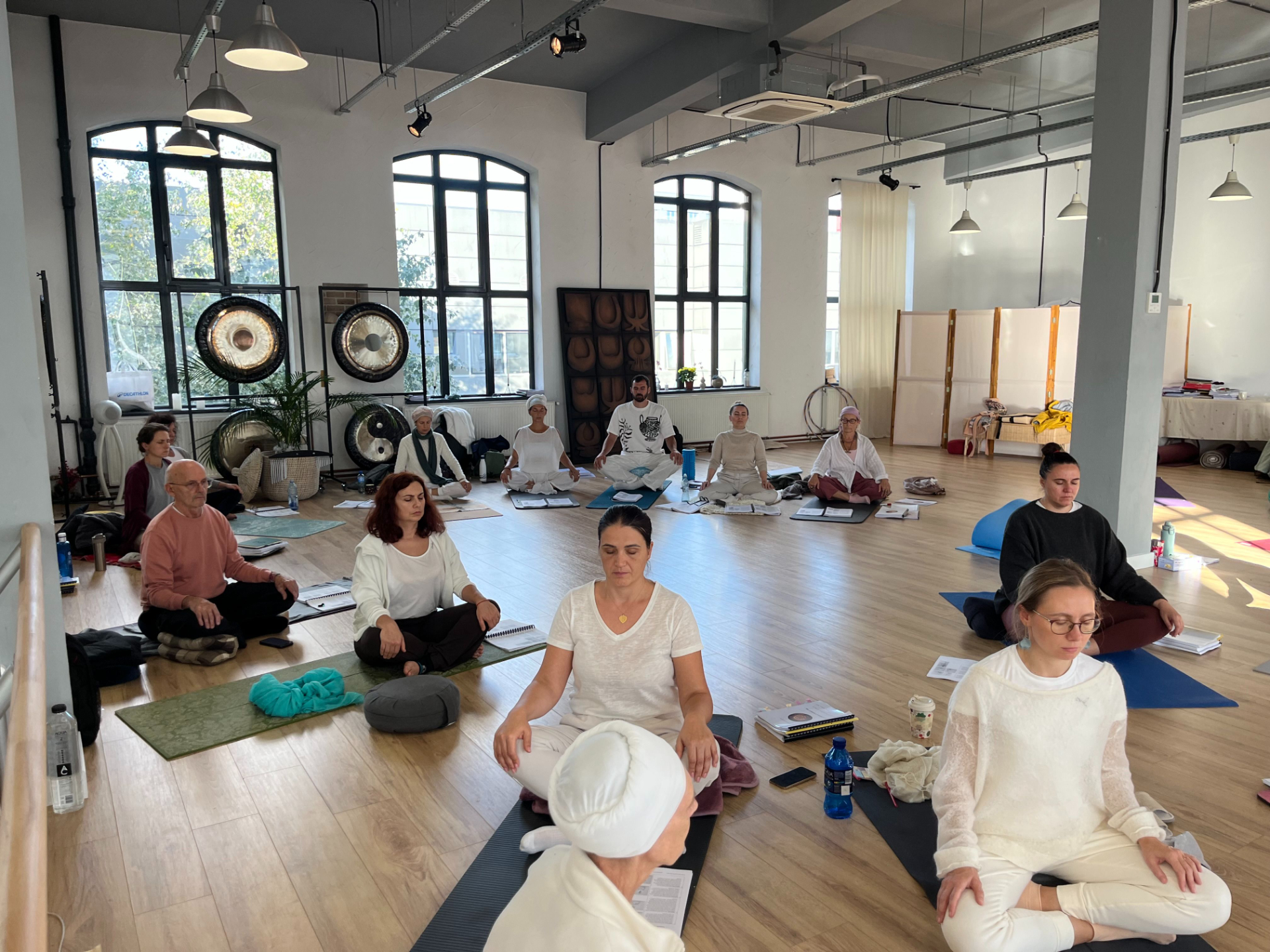
Here are a few definitions of Pranayama:
“Sustained observation and relaxation of all aspects of breathing, bringing about both a natural refinement of the respiratory process and bodymind tranquility” - The Yoga Sutras of Patanjali, by Chip Hartranft
“Regulating the breath helps us to master the movement of prana. Control of prana leads to control of the mind. The mind follows the breath” - Sat Dharam Kaur, Director of the Saibhang Institute
“Pranayama is the science of energy management through breath. Controlling the breath can influence states of health, consciousness, and emotion” - Sat Dharam Kaur, Director of the Saibhang Institute
Historical References to Prana can be traced back to the Vedic period. The Upanishads (Classical Age 500BCE-500CE) discuss the concept of spiritual energy rising through the body, leading to higher states of consciousness. From that classical period, The Yoga Sutras, compiled by Patanjali on Yoga, speaks of Pranayama as “breath energy regulation” and includes it as one of the eight limbs of the yogic path.
Hatha Upanishads speak of the vital energies of prana and their function in the body for sustaining life and spiritual growth, emphasizing the interconnectedness of the individual soul with universal life force (prana). The Yoga Kundalini Upanishad and Yoga Tattva Upanishad mention the relationship between prana, kundalini energy and spiritual awakening. The Tantra Period (500-1000 CE) contains teachings on yoga, meditation, and breath control for spiritual transformation. Classical Hatha Yoga texts in 11th-12th century speak of breathing practices for physical and mental well-being and discuss pranayama as an essential practice for purifying the energy channels of the body and awakening dormant kundalini energy.
On Breathing – How Prana enters our body through our breath
Oxygen is taken into the body through the lungs, and the oxygen atoms are distributed to every cell of the body to survive. All the cells of the body extract this panic energy from the oxygen atoms, and the cells themselves become like pranic batteries, as if holding an electrical charge. The cells of the body are the vessels that hold the pranic charge, which is continually being replenished by the oxygen.
The ‘pranic essence’ is taken by the cells of the body and the nerves, and transported to different locations of the body. One of them, crucial to life, is the brain. Prana is an extremely subtle substance responsible for the activity of thought and therefore, for transferring nerve impulses and sensations in all living organisms, without which we could not think or live.
It is understood that this ‘pranic essence’ is carried to the brain by a limited number of sets of cranial nerves straight into the brain in normal consciousness to function. The majority of the essence goes to the reproductive system where it is stored in the fluids of the reproductive system. There are physiological differences between males and females, but they are parallel processes that accomplish the same things.
The reproductive organs are major store houses of the pranic essence, used for sex/reproduction and pleasure. Prana is essential and necessary for insemination and gestation. When used for this purpose, prana converts into a gross form from the subtle essence.
It is essential for the brain to have this pranic essence to function properly. One of the key things to understand is that pranic essence must be very pure to work properly. Our western lifestyle poisons prana. Smoking, alcohol, diet, insufficient sleep, material gain, greed for power and wealth, etc., create toxicity in the prana. This causes difficulty with the process of evolution. And too, you can have all these aspects of lifestyle and bodymind purified, but you still must deal with the toxins in air, food, water, etc.
This subtle pranic essence is the spark of kundalini energy required for spiritual awakening, which requires a strong body, balanced nervous system and wholesome lifestyle for support and integration, hence, the practice of yoga throughout Indian history.
PHYSIOLOGICAL PSYCHOLOGICAL, AND SPIRITUAL EFFECTS OF PRANAYAMA
(Sat Dharam Kaur, Saibhang Institute)
- Physical: “Stress causes shallow, erratic, breathing focused in the upper chest area. This increases muscular tension, reducing the bodymind’s ability to relax. Over time, this state of being contributes to chronic stress, which weakens the nervous system, creates emotional imbalances and mental and physical illness. Proper breathing helps to restore the body’s natural state of balance and self-regulation”
- Emotional: “Tension and emotional trauma are stored as muscular “armour” in the body.” Correct breathing releases this tension, increases flexibility of the body and enhances emotional sensitivity, calm and resilience.
- Vitality And Connection: Breathing correctly frees the flow of prana, increasing vitality to the body organs and nervous system, creating a deep sense of physical, emotional and spiritual connection. From this place of peace and vitality, we can act from our True Self and serve our higher purpose with more wisdom, awareness and success.
Be in touch with Danielle!
To stay updated on the latest classes and programs by Danielle, please add yourself to her contact list.
